

[ad_1]
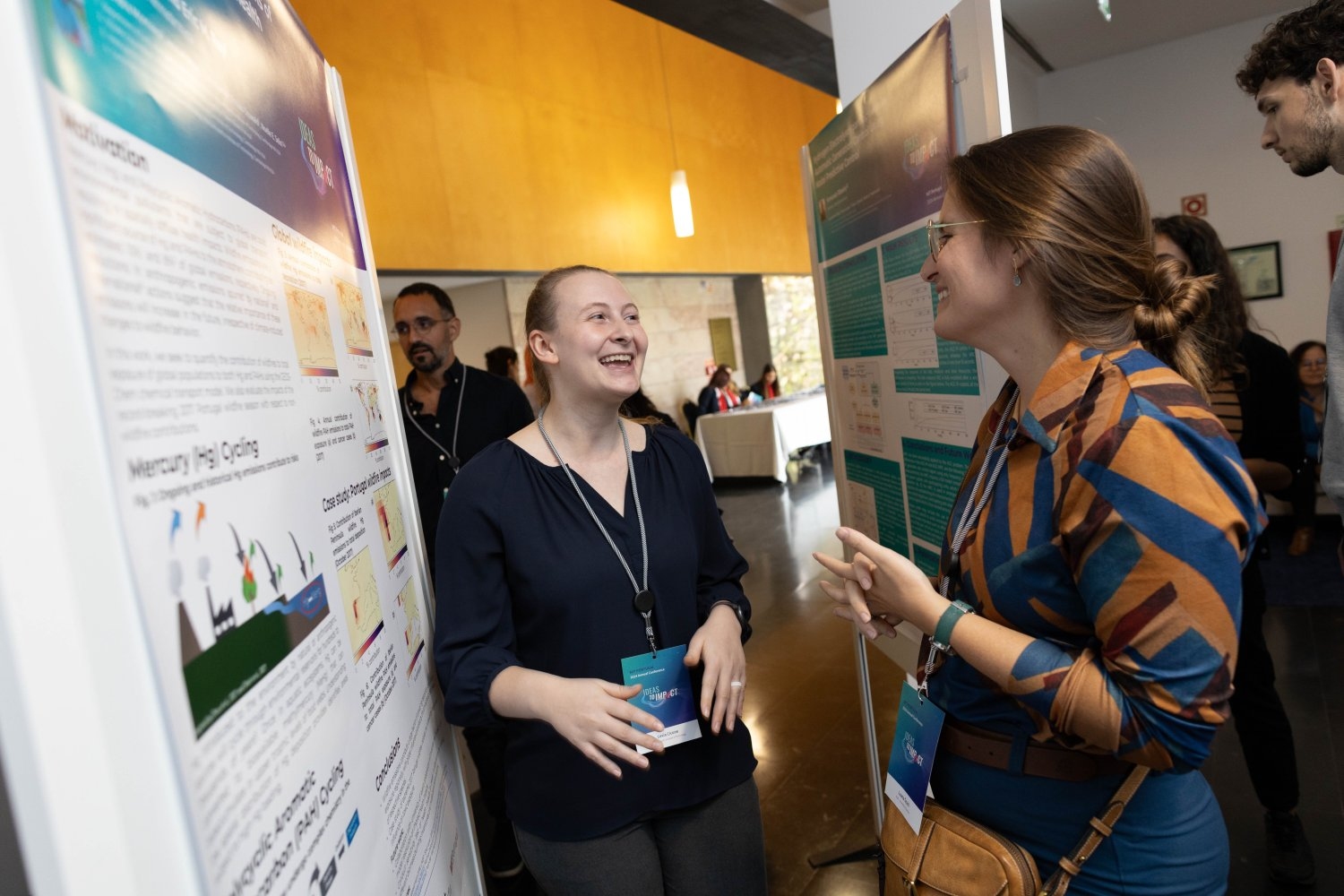
Since its founding 19 years in the past as a pioneering collaboration with Portuguese universities, analysis establishments and firms, the MIT-Portugal Program (MPP) has achieved a slew of successes — from enabling 47 entrepreneurial spinoffs and funding over 220 joint initiatives between MIT and Portuguese researchers to coaching a era of remarkable researchers on each side of the Atlantic.
In March, with practically 20 years of collaboration below their belts, MIT and the Portuguese Science and Expertise Basis (FCT) signed an settlement that formally launches this system’s subsequent chapter. Working by 2030, MPP’s Part 4 will help continued exploration of revolutionary concepts and options in fields starting from synthetic intelligence and nanotechnology to local weather change — each on the MIT campus and with companions all through Portugal.
“One of many benefits of getting a program that has gone on so lengthy is that we’re fairly effectively accustomed to one another at this level. Over time, we’ve realized one another’s methods, strengths and weaknesses and we’ve been in a position to create a synergy that will not have existed if we labored collectively for a brief time frame,” says Douglas Hart, MIT mechanical engineering professor and MPP co-director.
Hart and John Hansman, the T. Wilson Professor of Aeronautics and Astronautics at MIT and MPP co-director, are desirous to take this system’s present analysis initiatives additional, whereas including new areas of focus recognized by MIT and FCT. Often called the Fundação para a Ciência e Tecnologia in Portugal, FCT is the nationwide public company supporting analysis in science, expertise and innovation below Portugal’s Ministry of Training, Science and Innovation.
“Over the previous 20 years, the partnership with MIT has constructed a basis of belief that has fostered collaboration amongst researchers and the event of initiatives with important scientific impression and contributions to the Portuguese economic system,” Fernando Alexandre, Portugal’s minister for training, science, and innovation, says. “On this new part of the partnership, working from 2025 to 2030, we count on even higher ambition and impression — elevating Portuguese science and its capability to rework the economic system and enhance our society to even larger ranges, whereas serving to to deal with the challenges we face in areas corresponding to local weather change and the oceans, digitalization, and area.”
“Worldwide collaborations just like the MIT-Portugal Program are completely very important to MIT’s mission of analysis, training and repair. I’m thrilled to see this system transfer into its subsequent part,” says MIT President Sally Kornbluth. “MPP provides our college and college students alternatives to work in distinctive analysis environments the place they not solely make new findings and be taught new strategies but additionally contribute to fixing pressing native and international issues. MPP’s work within the realm of ocean science and local weather is a main instance of how worldwide partnerships like this will help remedy vital human issues.”
Sharing MIT’s dedication to tutorial independence and excellence, Kornbluth provides, “the establishments and researchers we accomplice with by MPP improve MIT’s means to attain its mission, enabling us to pursue the exacting requirements of mental and inventive distinction that make MIT a cradle of innovation and world chief in scientific discovery.”
The epitome of an efficient worldwide collaboration, MPP has stayed true to its mission and continued to ship outcomes right here within the U.S. and in Portugal for practically 20 years — prevailing amid myriad shifts within the political, social, and financial panorama. The multifaceted program encompasses an annual analysis convention and academic summits corresponding to an Innovation Workshop at MIT every June and a Marine Robotics Summer time College within the Azores in July, in addition to pupil and school exchanges that facilitate collaborative analysis. In the course of the third part of this system alone, 59 MIT college students and 53 college and researchers visited Portugal, and MIT hosted 131 college students and 49 college and researchers from Portuguese universities and different establishments.
In every roughly five-year part, MPP researchers deal with a handful of core analysis areas. For Part 3, MPP superior cutting-edge analysis in 4 strategic areas: local weather science and local weather change; Earth methods: oceans to close area; digital transformation in manufacturing; and sustainable cities. Inside these broad areas, MIT and FCT researchers labored collectively on quite a few small-scale initiatives and a number of other massive “flagship” ones, together with improvement of Portugal’s CubeSat satellite tv for pc, a collaboration between MPP and a number of other Portuguese universities and corporations that marked the nation’s second satellite tv for pc launch and the primary in 30 years.
Whereas work within the Part 3 fields will proceed throughout Part 4, researchers will even flip their consideration to 4 extra areas: chips/nanotechnology, vitality (a earlier focus in Part 2), synthetic intelligence, and area.
“We’re opening up the aperture for added collaboration areas,” Hansman says.
Along with specializing in distinct topic areas, every part has emphasised the assorted elements of MPP’s mission to differing levels. Whereas Part 3 accentuated collaborative analysis greater than academic exchanges and entrepreneurship, these two features will likely be given extra weight below the Part 4 settlement, Hart mentioned.
“We have now approval in Part 4 to convey quite a lot of Portuguese college students over, and our principal investigators will profit from shut collaborations with Portuguese researchers,” he says.
The longevity of MPP and the latest launch of Part 4 are proof of this system’s worth. This system has performed a job within the academic, technological and financial progress Portugal has achieved over the previous 20 years, as effectively.
“The Portugal of right now is remarkably stronger than the Portugal of 20 years in the past, and lots of the locations the place they’re stronger have been impacted by this system,” says Hansman, pointing to sustainable cities and “inexperienced” vitality, specifically. “We will’t take direct credit score, however we’ve been a part of Portugal’s journey ahead.”
Since MPP started, Hart provides, “Portugal has grow to be rather more entrepreneurial. Many, many, many extra start-up firms are popping out of Portuguese universities than there was.”
A latest evaluation of MPP and FCT’s different U.S. collaborations highlighted quite a lot of constructive outcomes. The report famous that collaborations with MIT and different US universities have enhanced Portuguese analysis capacities and promoted organizational upgrades within the nationwide R&D ecosystem, whereas offering Portuguese universities and corporations with alternatives to have interaction in advanced initiatives that will have been tough to undertake on their very own.
Relating to MIT specifically, the report discovered that MPP’s long-term collaboration has spawned the institution of sustained doctoral packages and pointed to a marked shift inside Portugal’s academic ecosystem towards globally aligned requirements. MPP, it reported, has facilitated the training of 198 Portuguese PhDs.
Portugal’s universities, college students and corporations aren’t alone in benefitting from the analysis, networks, and financial exercise MPP has spawned. MPP additionally delivers distinctive worth to MIT, in addition to to the broader US science and analysis group. Among the many program’s constant themes over time, for instance, is “joint curiosity within the Atlantic,” Hansman says.
This summer time, Faial Island within the Azores will host MPP’s fifth annual Marine Robotics Summer time College, a two-week course open to 12 Portuguese Grasp’s and first 12 months PhD college students and 12 MIT upper-level undergraduates and graduate college students. The course, which incorporates lectures by MIT and Portuguese college and different researchers, workshops, labs and hands-on experiences, “is all the time my favourite,” mentioned Hart.
“I get to work with a few of the greatest researchers on this planet there, and a few of the prime college students popping out of Woods Gap Oceanographic Establishment, MIT, and Portugal,” he says, including that a few of his earlier Marine Robotics Summer time College college students have come to review at MIT after which gone on to grow to be professors in ocean science.
“So, it’s been thrilling to see the expansion of scholars popping out of that program, definitely a constructive impression,” Hart says.
MPP offers one-of-a-kind alternatives for ocean analysis because of the distinctive marine services obtainable in Portugal, together with not solely open ocean off the Azores but additionally Lisbon’s deep-water port and a Portuguese Naval facility simply south of Lisbon that’s obtainable for collaborative analysis by worldwide scientists. Like MIT, Portuguese universities are additionally strongly invested in local weather change analysis — a discipline of research keenly associated to ocean methods.
“The worldwide collaboration has allowed us to check and additional develop our analysis prototypes in several aquaculture environments each within the US and in Portugal, whereas constructing on the distinctive experience of our Portuguese college collaborator Dr. Ricardo Calado from the College of Aveiro and our trade collaborators,” says Stefanie Mueller, the TIBCO Profession Improvement Affiliate Professor in MIT’s departments of Electrical Engineering and Pc Science and Mechanical Engineering and chief of the Human-Pc Interplay Group on the MIT Pc Science and Synthetic Intelligence Lab.
Mueller factors to the work of MIT mechanical engineering PhD pupil Charlene Xia, a Marine Robotics Summer time College participant, whose analysis is aimed toward creating a cost-effective system to watch the microbiome of seaweed farms and halt the unfold of dangerous micro organism related to ocean warming. Along with taking part in the summertime college as a pupil, Xia returned to the Azores for 2 subsequent years as a educating assistant.
“The MIT-Portugal Program has been a key enabler of our analysis on monitoring the aquatic microbiome for potential illness outbreaks,” Mueller says.
As MPP enters its subsequent part, Hart and Hansman are optimistic about this system’s persevering with success on each side of the Atlantic and envision broadening its impression going ahead.
“I believe, at this level, the analysis goes rather well, and we’ve bought quite a lot of connections. I believe one among our targets is to increase not the science of this system essentially, however the teams concerned,” Hart says, noting that MPP might have a much bigger presence in technical fields corresponding to AI and micro-nano manufacturing, in addition to in social sciences and humanities.
“We’d wish to contain many extra individuals and new individuals right here at MIT, in addition to in Portugal,” he says, “in order that we are able to attain a bigger slice of the inhabitants.”
[ad_2]
Source link


