

[ad_1]
Most AI groups give attention to the mistaken issues. Right here’s a standard scene from my consulting work:
AI TEAMHere’s our agent structure—we’ve obtained RAG right here, a router there, and we’re utilizing this new framework for…
ME[Holding up my hand to pause the enthusiastic tech lead]Are you able to present me the way you’re measuring if any of this really works?
… Room goes quiet

Be taught sooner. Dig deeper. See farther.
This scene has performed out dozens of instances during the last two years. Groups make investments weeks constructing advanced AI methods however can’t inform me if their modifications are serving to or hurting.
This isn’t shocking. With new instruments and frameworks rising weekly, it’s pure to give attention to tangible issues we are able to management—which vector database to make use of, which LLM supplier to decide on, which agent framework to undertake. However after serving to 30+ firms construct AI merchandise, I’ve found that the groups who succeed barely speak about instruments in any respect. As a substitute, they obsess over measurement and iteration.
On this publish, I’ll present you precisely how these profitable groups function. Whereas each scenario is exclusive, you’ll see patterns that apply no matter your area or crew measurement. Let’s begin by inspecting the most typical mistake I see groups make—one which derails AI tasks earlier than they even start.
The Most Widespread Mistake: Skipping Error Evaluation
The “instruments first” mindset is the most typical mistake in AI growth. Groups get caught up in structure diagrams, frameworks, and dashboards whereas neglecting the method of really understanding what’s working and what isn’t.
One shopper proudly confirmed me this analysis dashboard:
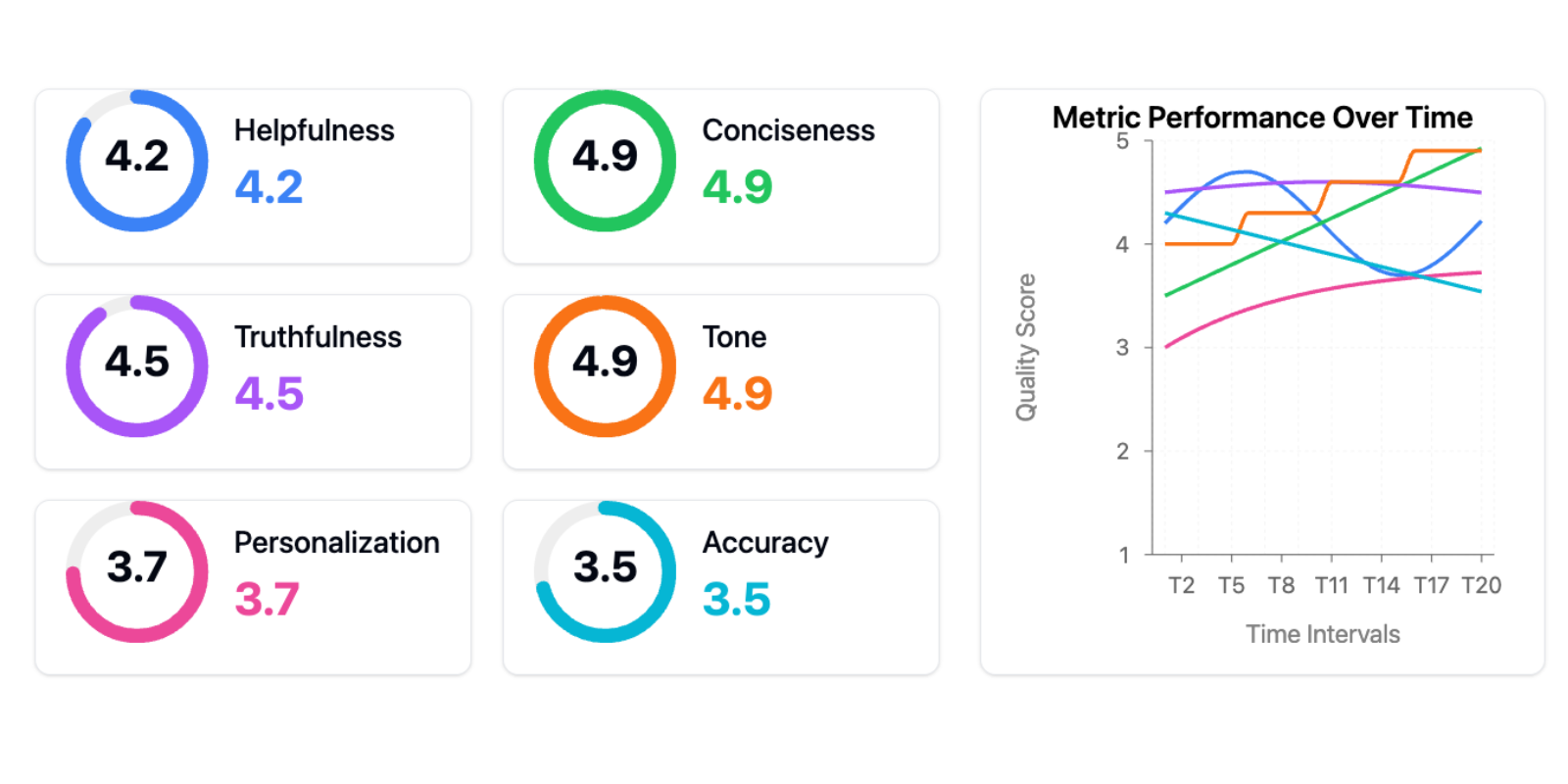
That is the “instruments lure”—the idea that adopting the appropriate instruments or frameworks (on this case, generic metrics) will clear up your AI issues. Generic metrics are worse than ineffective—they actively impede progress in two methods:
First, they create a false sense of measurement and progress. Groups suppose they’re data-driven as a result of they’ve dashboards, however they’re monitoring self-importance metrics that don’t correlate with actual person issues. I’ve seen groups have fun enhancing their “helpfulness rating” by 10% whereas their precise customers had been nonetheless combating primary duties. It’s like optimizing your web site’s load time whereas your checkout course of is damaged—you’re getting higher on the mistaken factor.
Second, too many metrics fragment your consideration. As a substitute of specializing in the few metrics that matter to your particular use case, you’re making an attempt to optimize a number of dimensions concurrently. When every thing is vital, nothing is.
The choice? Error evaluation: the only Most worthy exercise in AI growth and persistently the highest-ROI exercise. Let me present you what efficient error evaluation seems to be like in apply.
The Error Evaluation Course of
When Jacob, the founding father of Nurture Boss, wanted to enhance the corporate’s apartment-industry AI assistant, his crew constructed a easy viewer to look at conversations between their AI and customers. Subsequent to every dialog was an area for open-ended notes about failure modes.
After annotating dozens of conversations, clear patterns emerged. Their AI was combating date dealing with—failing 66% of the time when customers mentioned issues like “Let’s schedule a tour two weeks from now.”
As a substitute of reaching for brand new instruments, they:
Checked out precise dialog logs Categorized the forms of date-handling failures Constructed particular exams to catch these points Measured enchancment on these metrics
The end result? Their date dealing with success price improved from 33% to 95%.
Right here’s Jacob explaining this course of himself:
Backside-Up Versus High-Down Evaluation
When figuring out error varieties, you possibly can take both a “top-down” or “bottom-up” method.
The highest-down method begins with widespread metrics like “hallucination” or “toxicity” plus metrics distinctive to your process. Whereas handy, it typically misses domain-specific points.
The more practical bottom-up method forces you to take a look at precise knowledge and let metrics naturally emerge. At Nurture Boss, we began with a spreadsheet the place every row represented a dialog. We wrote open-ended notes on any undesired habits. Then we used an LLM to construct a taxonomy of widespread failure modes. Lastly, we mapped every row to particular failure mode labels and counted the frequency of every subject.
The outcomes had been hanging—simply three points accounted for over 60% of all issues:
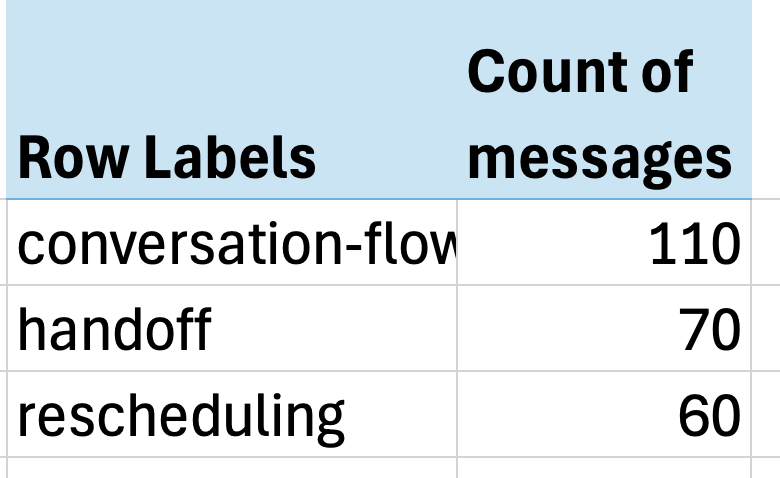
Dialog move points (lacking context, awkward responses)Handoff failures (not recognizing when to switch to people)Rescheduling issues (combating date dealing with)
The affect was quick. Jacob’s crew had uncovered so many actionable insights that they wanted a number of weeks simply to implement fixes for the issues we’d already discovered.
For those who’d prefer to see error evaluation in motion, we recorded a reside walkthrough right here.
This brings us to an important query: How do you make it simple for groups to take a look at their knowledge? The reply leads us to what I contemplate an important funding any AI crew could make…
The Most Necessary AI Funding: A Easy Knowledge Viewer
The one most impactful funding I’ve seen AI groups make isn’t a elaborate analysis dashboard—it’s constructing a personalized interface that lets anybody look at what their AI is definitely doing. I emphasize personalized as a result of each area has distinctive wants that off-the-shelf instruments not often deal with. When reviewing residence leasing conversations, it’s essential see the complete chat historical past and scheduling context. For real-estate queries, you want the property particulars and supply paperwork proper there. Even small UX choices—like the place to put metadata or which filters to reveal—could make the distinction between a instrument folks really use and one they keep away from.
I’ve watched groups wrestle with generic labeling interfaces, searching by means of a number of methods simply to know a single interplay. The friction provides up: clicking by means of to totally different methods to see context, copying error descriptions into separate monitoring sheets, switching between instruments to confirm data. This friction doesn’t simply sluggish groups down—it actively discourages the type of systematic evaluation that catches refined points.
Groups with thoughtfully designed knowledge viewers iterate 10x sooner than these with out them. And right here’s the factor: These instruments might be inbuilt hours utilizing AI-assisted growth (like Cursor or Loveable). The funding is minimal in comparison with the returns.
Let me present you what I imply. Right here’s the information viewer constructed for Nurture Boss (which I mentioned earlier):
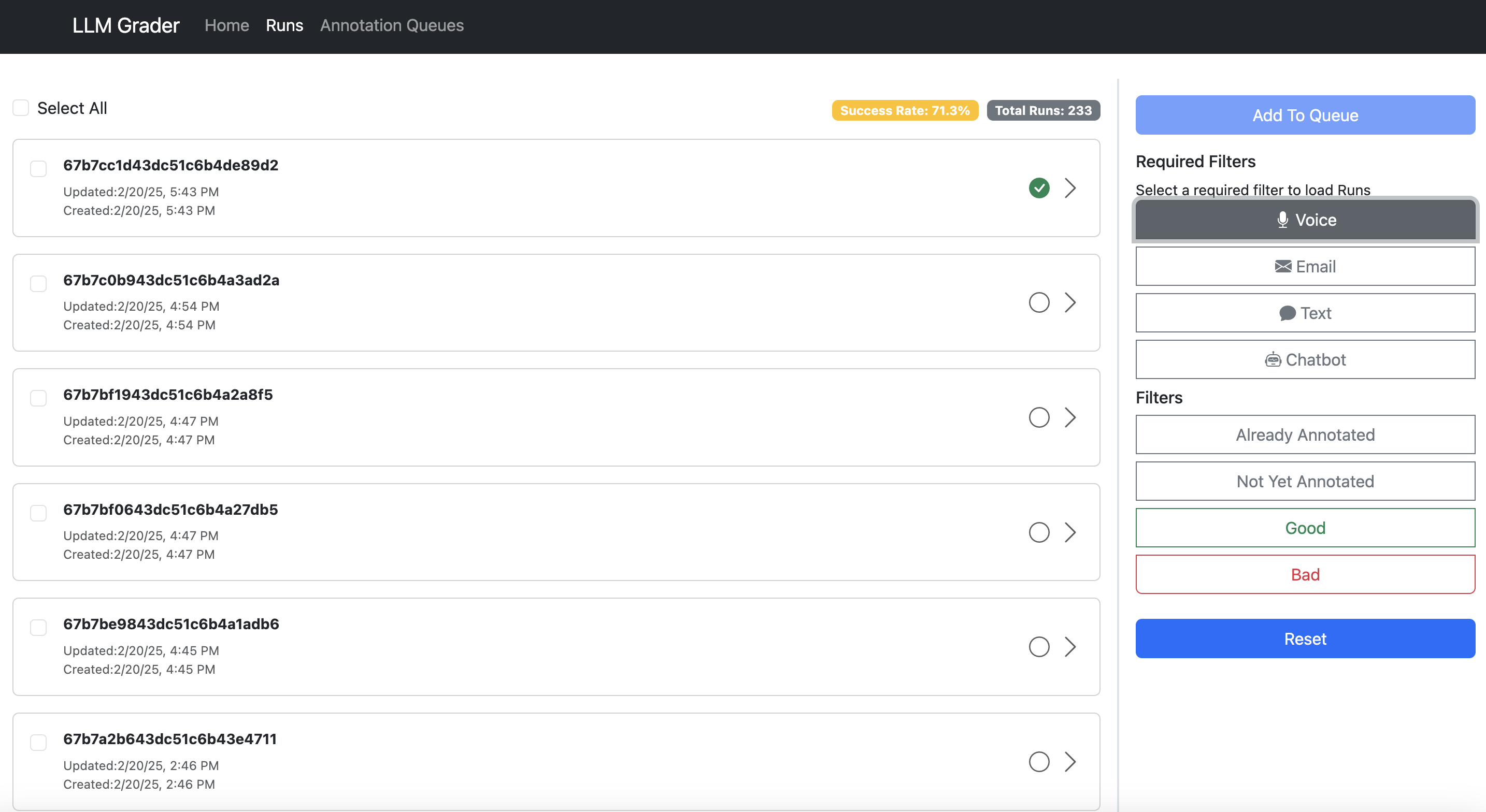
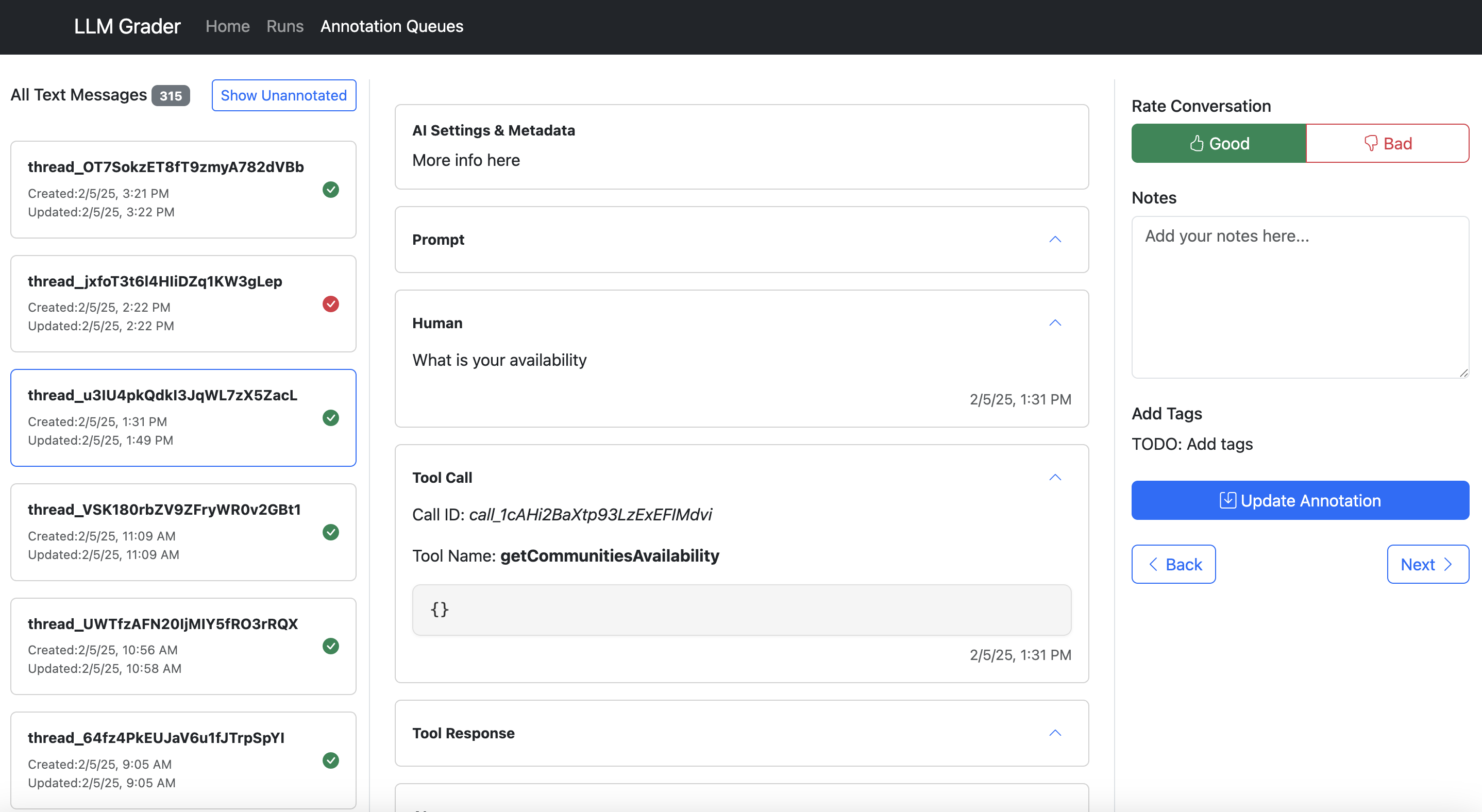
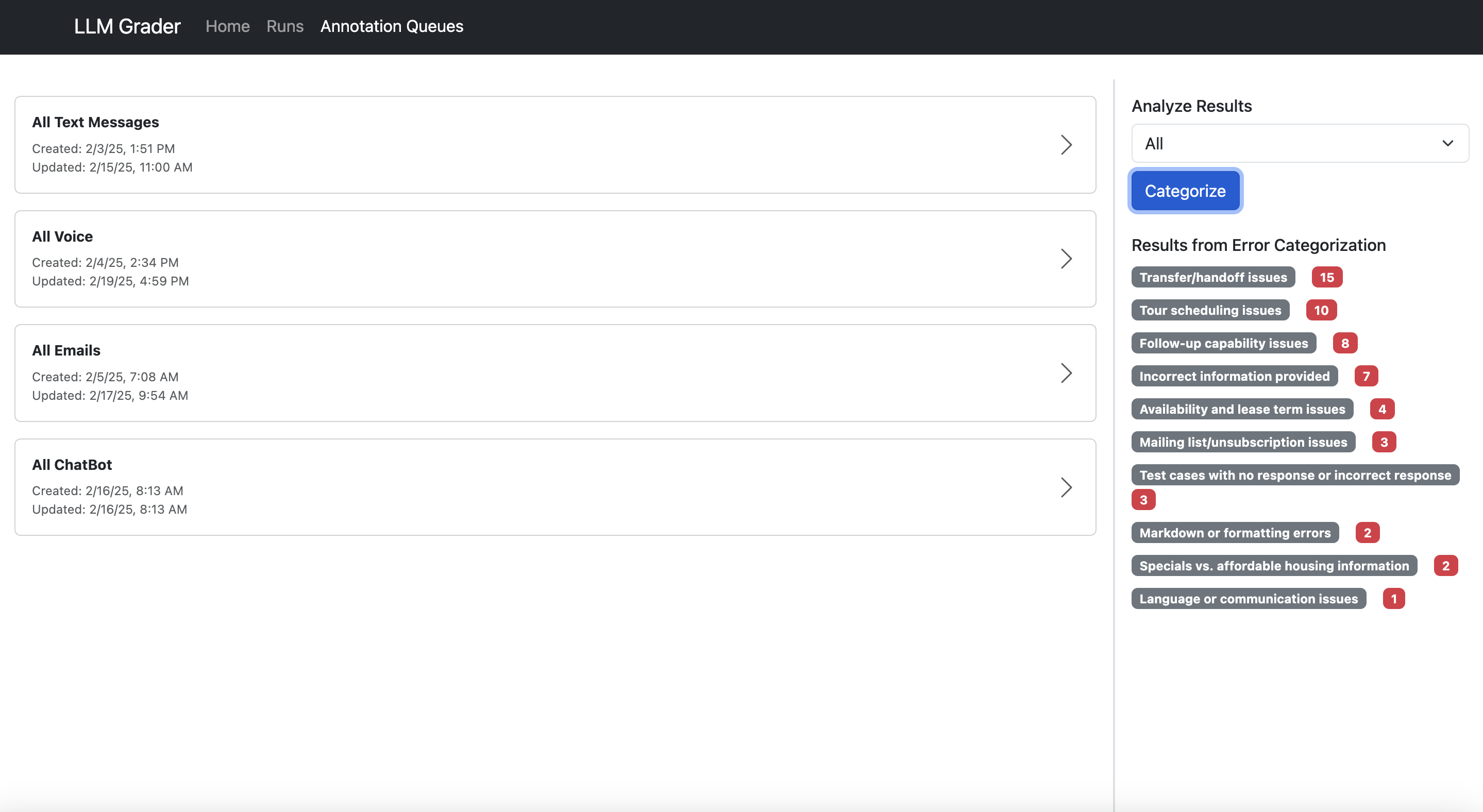
Right here’s what makes an excellent knowledge annotation instrument:
Present all context in a single place. Don’t make customers hunt by means of totally different methods to know what occurred.Make suggestions trivial to seize. One-click appropriate/incorrect buttons beat prolonged varieties.Seize open-ended suggestions. This allows you to seize nuanced points that don’t match right into a predefined taxonomy.Allow fast filtering and sorting. Groups want to simply dive into particular error varieties. Within the instance above, Nurture Boss can shortly filter by the channel (voice, textual content, chat) or the precise property they need to take a look at shortly.Have hotkeys that enable customers to navigate between knowledge examples and annotate with out clicking.
It doesn’t matter what internet frameworks you utilize—use no matter you’re aware of. As a result of I’m a Python developer, my present favourite internet framework is FastHTML coupled with MonsterUI as a result of it permits me to outline the backend and frontend code in a single small Python file.
The secret is beginning someplace, even when it’s easy. I’ve discovered customized internet apps present the most effective expertise, however for those who’re simply starting, a spreadsheet is best than nothing. As your wants develop, you possibly can evolve your instruments accordingly.
This brings us to a different counterintuitive lesson: The folks finest positioned to enhance your AI system are sometimes those who know the least about AI.
Empower Area Specialists to Write Prompts
I lately labored with an training startup constructing an interactive studying platform with LLMs. Their product supervisor, a studying design knowledgeable, would create detailed PowerPoint decks explaining pedagogical rules and instance dialogues. She’d current these to the engineering crew, who would then translate her experience into prompts.
However right here’s the factor: Prompts are simply English. Having a studying knowledgeable talk educating rules by means of PowerPoint just for engineers to translate that again into English prompts created pointless friction. Essentially the most profitable groups flip this mannequin by giving area consultants instruments to put in writing and iterate on prompts immediately.
Construct Bridges, Not Gatekeepers
Immediate playgrounds are a fantastic start line for this. Instruments like Arize, LangSmith, and Braintrust let groups shortly check totally different prompts, feed in instance datasets, and examine outcomes. Listed below are some screenshots of those instruments:
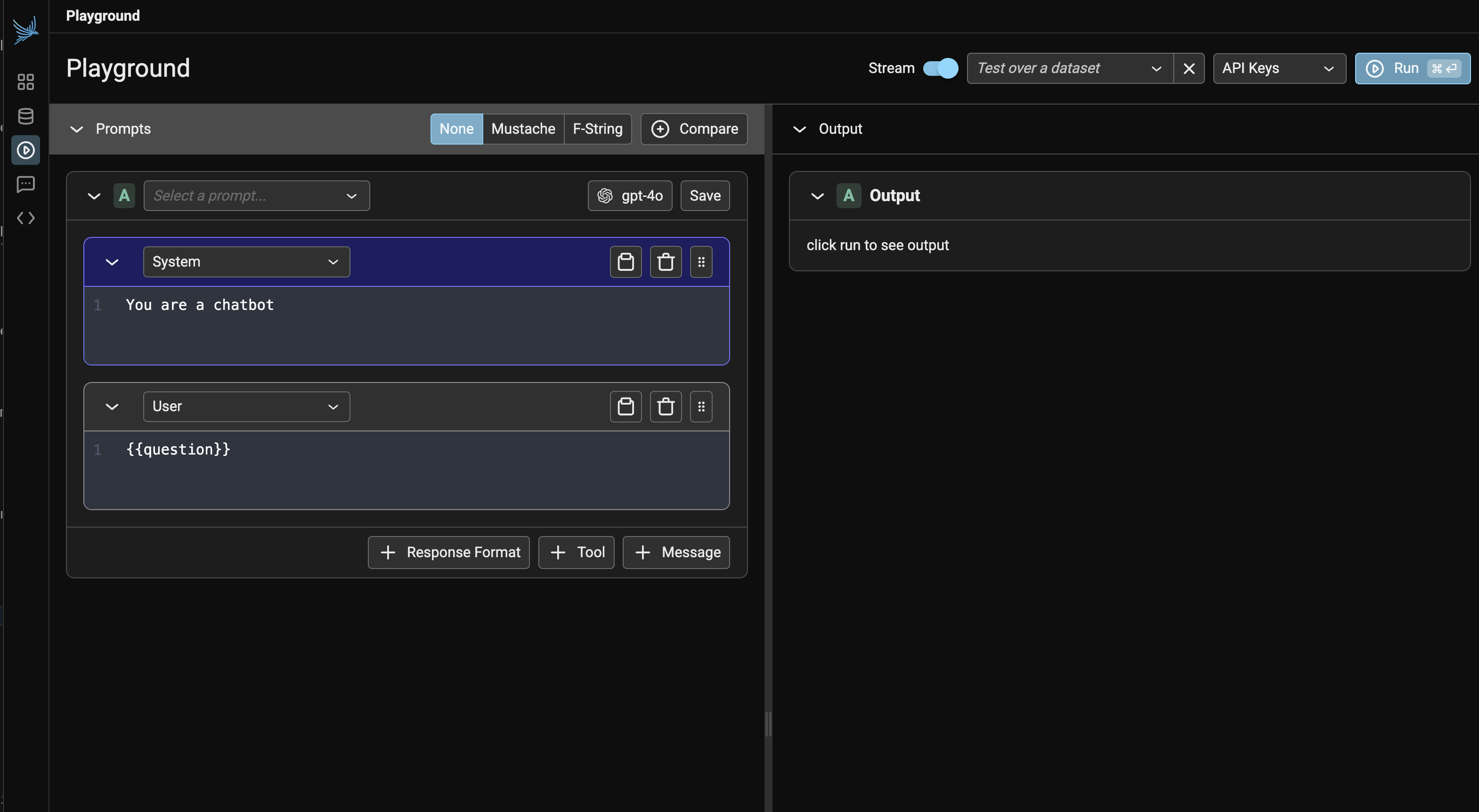
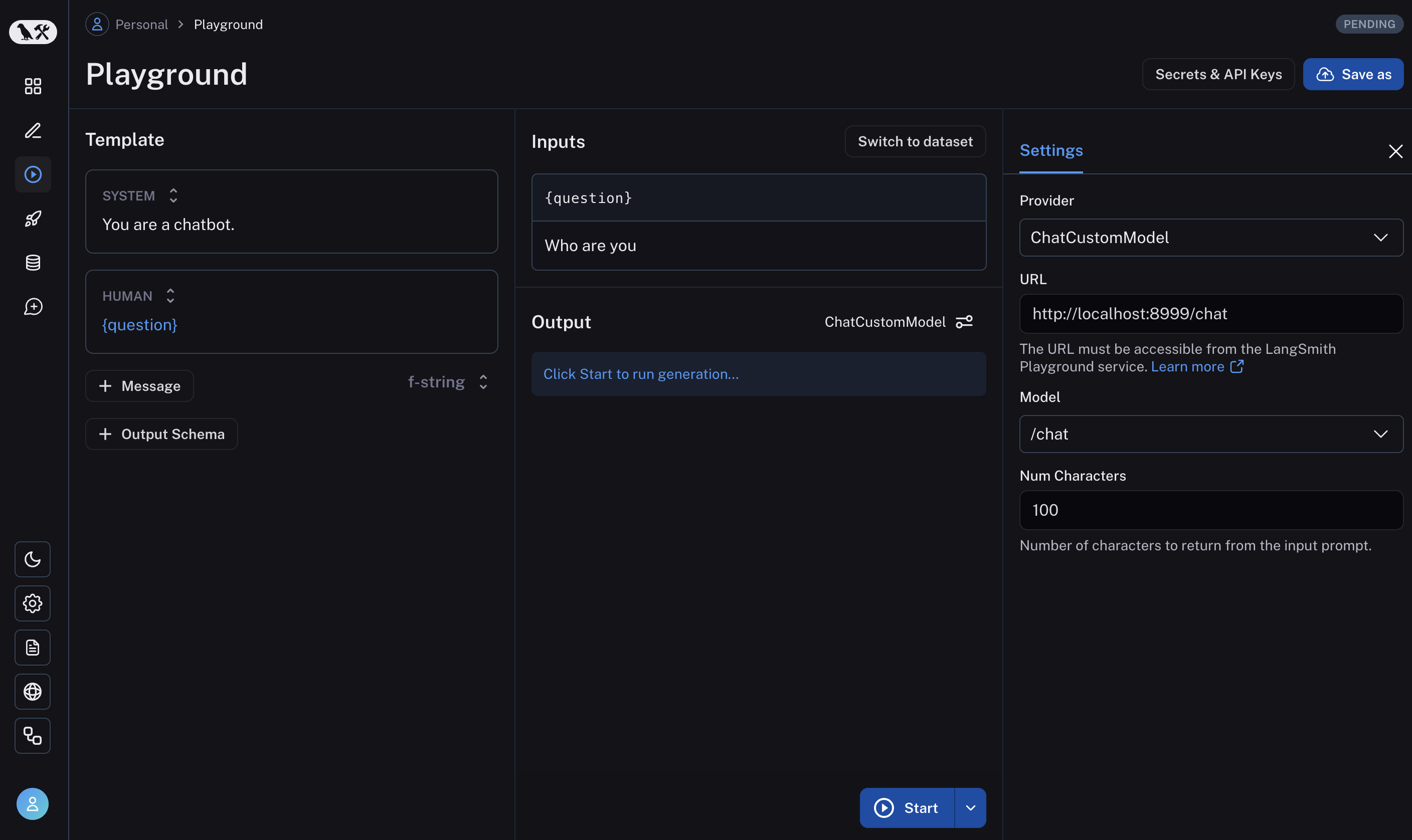
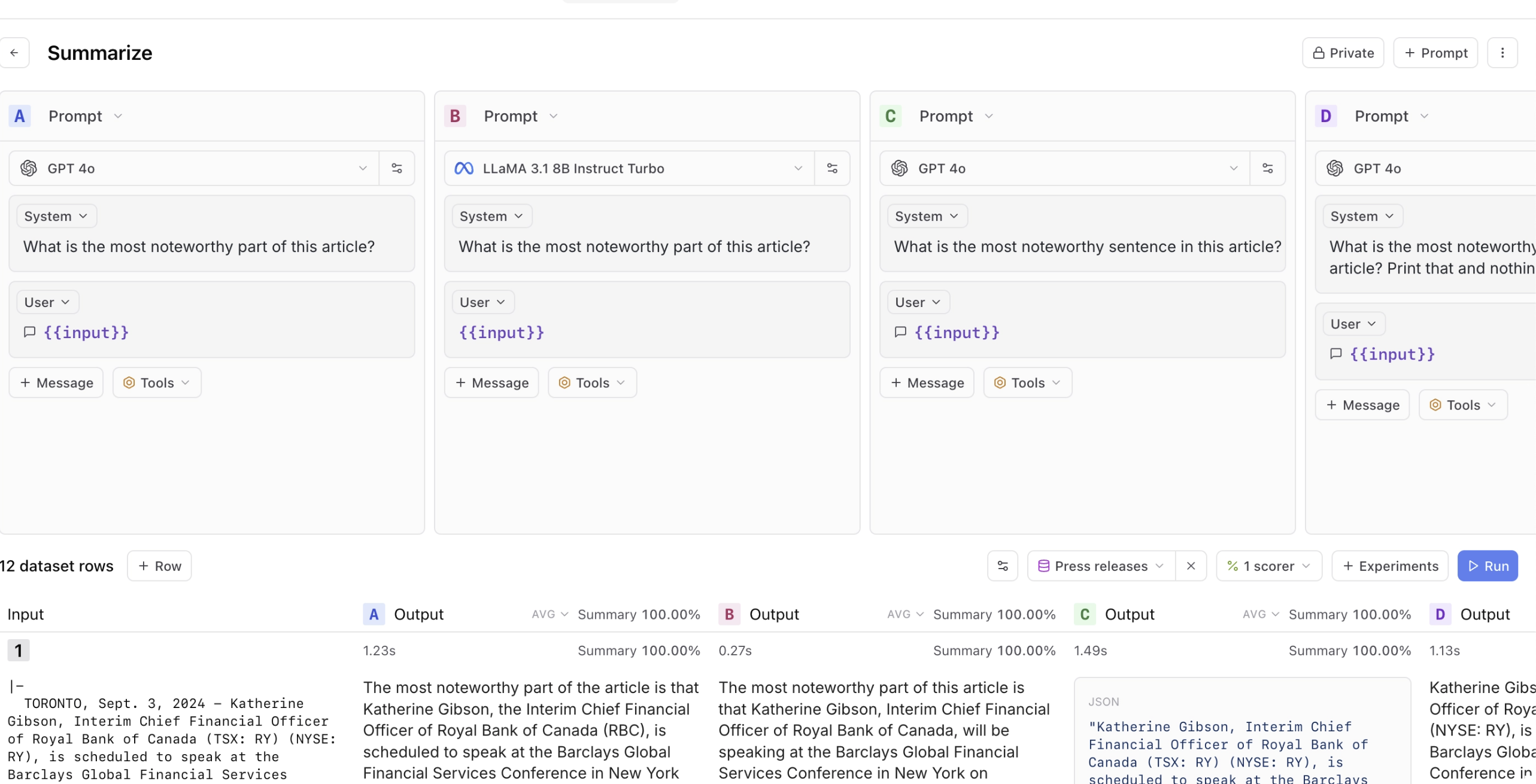
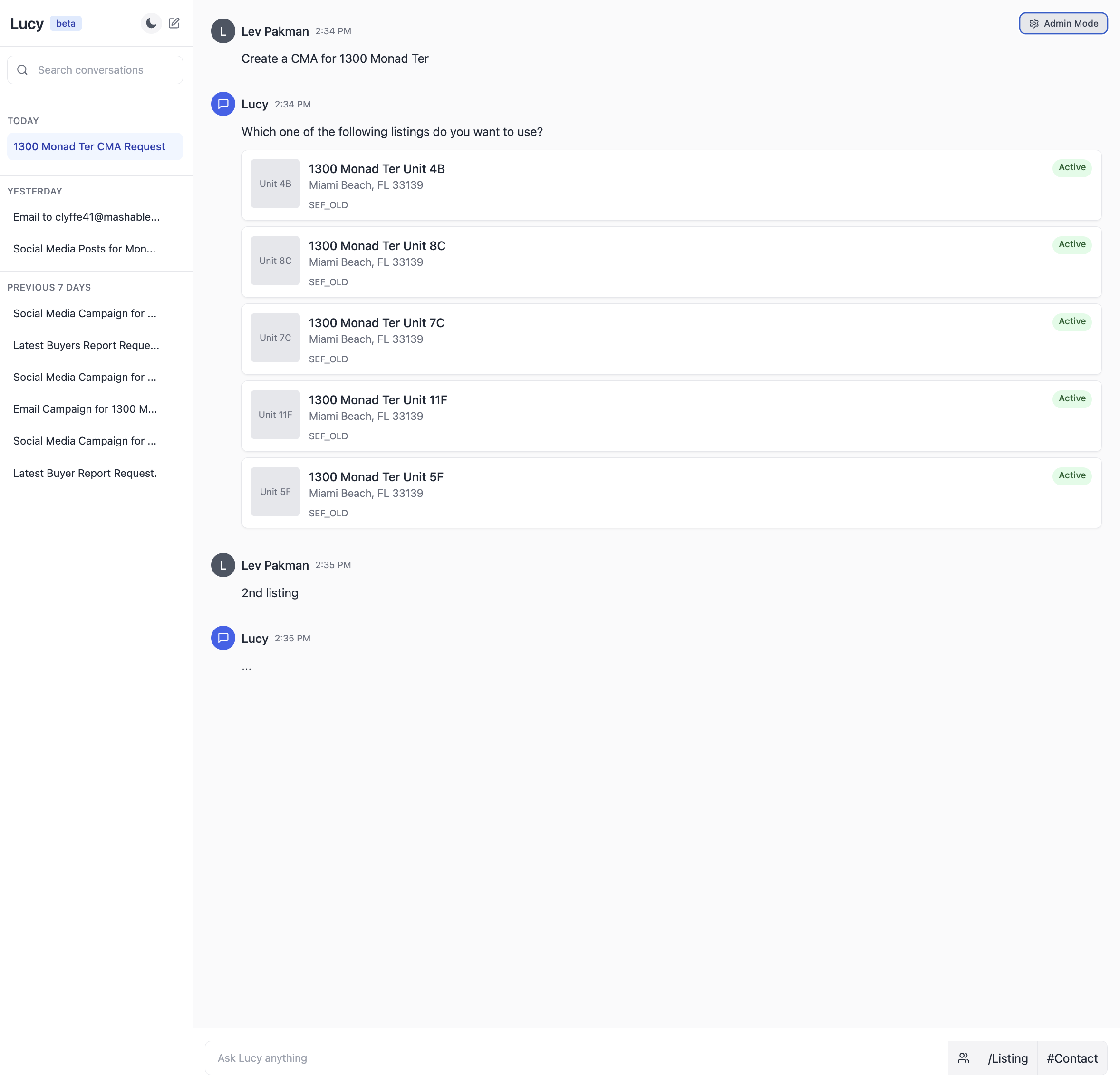
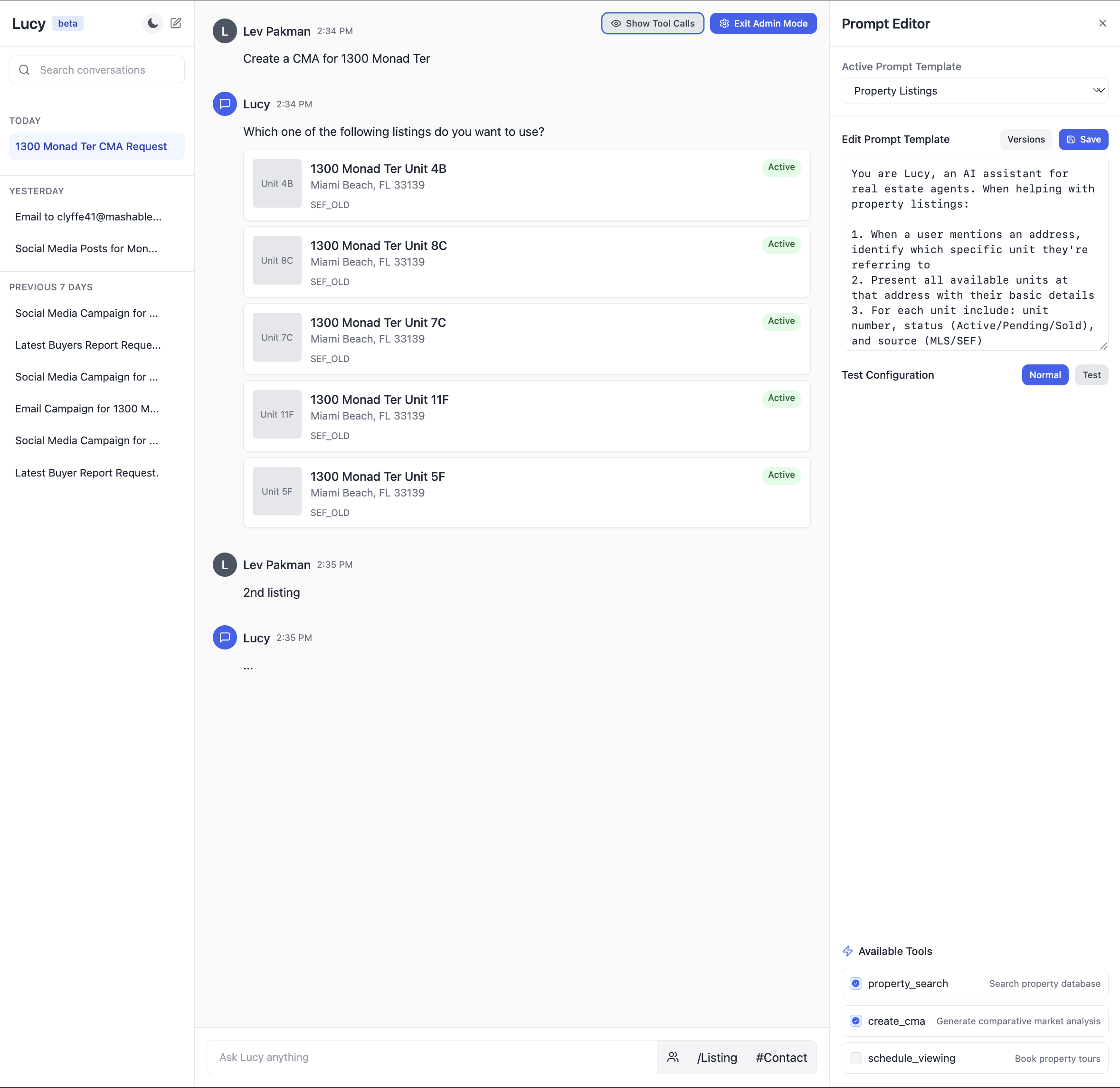
However there’s an important subsequent step that many groups miss: integrating immediate growth into their utility context. Most AI functions aren’t simply prompts; they generally contain RAG methods pulling out of your information base, agent orchestration coordinating a number of steps, and application-specific enterprise logic. The best groups I’ve labored with transcend stand-alone playgrounds. They construct what I name built-in immediate environments—primarily admin variations of their precise person interface that expose immediate enhancing.
Right here’s an illustration of what an built-in immediate setting may seem like for a real-estate AI assistant:
Ideas for Speaking With Area Specialists
There’s one other barrier that usually prevents area consultants from contributing successfully: pointless jargon. I used to be working with an training startup the place engineers, product managers, and studying specialists had been speaking previous one another in conferences. The engineers saved saying, “We’re going to construct an agent that does XYZ,” when actually the job to be performed was writing a immediate. This created a man-made barrier—the training specialists, who had been the precise area consultants, felt like they couldn’t contribute as a result of they didn’t perceive “brokers.”
This occurs in every single place. I’ve seen it with attorneys at authorized tech firms, psychologists at psychological well being startups, and docs at healthcare corporations. The magic of LLMs is that they make AI accessible by means of pure language, however we regularly destroy that benefit by wrapping every thing in technical terminology.
Right here’s a easy instance of find out how to translate widespread AI jargon:
This doesn’t imply dumbing issues down—it means being exact about what you’re really doing. While you say, “We’re constructing an agent,” what particular functionality are you including? Is it perform calling? Instrument use? Or only a higher immediate? Being particular helps everybody perceive what’s really taking place.
There’s nuance right here. Technical terminology exists for a purpose: it supplies precision when speaking with different technical stakeholders. The secret is adapting your language to your viewers.
The problem many groups increase at this level is “This all sounds nice, however what if we don’t have any knowledge but? How can we take a look at examples or iterate on prompts once we’re simply beginning out?” That’s what we’ll speak about subsequent.
Bootstrapping Your AI With Artificial Knowledge Is Efficient (Even With Zero Customers)
One of the crucial widespread roadblocks I hear from groups is “We will’t do correct analysis as a result of we don’t have sufficient actual person knowledge but.” This creates a chicken-and-egg downside—you want knowledge to enhance your AI, however you want a good AI to get customers who generate that knowledge.
Fortuitously, there’s an answer that works surprisingly nicely: artificial knowledge. LLMs can generate lifelike check circumstances that cowl the vary of situations your AI will encounter.
As I wrote in my LLM-as-a-Choose weblog publish, artificial knowledge might be remarkably efficient for analysis. Bryan Bischof, the previous head of AI at Hex, put it completely:
LLMs are surprisingly good at producing wonderful – and numerous – examples of person prompts. This may be related for powering utility options, and sneakily, for constructing Evals. If this sounds a bit just like the Giant Language Snake is consuming its tail, I used to be simply as stunned as you! All I can say is: it really works, ship it.
A Framework for Producing Sensible Take a look at Knowledge
The important thing to efficient artificial knowledge is choosing the proper dimensions to check. Whereas these dimensions will fluctuate based mostly in your particular wants, I discover it useful to consider three broad classes:
Options: What capabilities does your AI must assist?Situations: What conditions will it encounter?Person personas: Who might be utilizing it and the way?
These aren’t the one dimensions you may care about—you may also need to check totally different tones of voice, ranges of technical sophistication, and even totally different locales and languages. The vital factor is figuring out dimensions that matter to your particular use case.
For a real-estate CRM AI assistant I labored on with Rechat, we outlined these dimensions like this:

However having these dimensions outlined is just half the battle. The true problem is making certain your artificial knowledge really triggers the situations you need to check. This requires two issues:
A check database with sufficient selection to assist your scenariosA strategy to confirm that generated queries really set off meant situations
For Rechat, we maintained a check database of listings that we knew would set off totally different edge circumstances. Some groups favor to make use of an anonymized copy of manufacturing knowledge, however both approach, it’s essential guarantee your check knowledge has sufficient selection to train the situations you care about.
Right here’s an instance of how we would use these dimensions with actual knowledge to generate check circumstances for the property search function (that is simply pseudo code, and really illustrative):
def generate_search_query(state of affairs, persona, listing_db):
“””Generate a practical person question about listings”””
# Pull actual itemizing knowledge to floor the technology
sample_listings = listing_db.get_sample_listings(
price_range=persona.price_range,
location=persona.preferred_areas
)
# Confirm now we have listings that may set off our state of affairs
if state of affairs == “multiple_matches” and len(sample_listings) 0:
increase ValueError(“Discovered matches when testing no-match state of affairs”)
immediate = f”””
You might be an knowledgeable actual property agent who’s looking for listings. You might be given a buyer sort and a state of affairs.
Your job is to generate a pure language question you’ll use to look these listings.
Context:
– Buyer sort: {persona.description}
– Situation: {state of affairs}
Use these precise listings as reference:
{format_listings(sample_listings)}
The question ought to mirror the shopper sort and the state of affairs.
Instance question: Discover houses within the 75019 zip code, 3 bedrooms, 2 loos, worth vary $750k – $1M for an investor.
“””
return generate_with_llm(immediate)
This produced lifelike queries like:
The important thing to helpful artificial knowledge is grounding it in actual system constraints. For the real-estate AI assistant, this implies:
Utilizing actual itemizing IDs and addresses from their databaseIncorporating precise agent schedules and availability windowsRespecting enterprise guidelines like displaying restrictions and see periodsIncluding market-specific particulars like HOA necessities or native rules
We then feed these check circumstances by means of Lucy (now a part of Capability) and log the interactions. This offers us a wealthy dataset to investigate, displaying precisely how the AI handles totally different conditions with actual system constraints. This method helped us repair points earlier than they affected actual customers.
Typically you don’t have entry to a manufacturing database, particularly for brand new merchandise. In these circumstances, use LLMs to generate each check queries and the underlying check knowledge. For a real-estate AI assistant, this may imply creating artificial property listings with lifelike attributes—costs that match market ranges, legitimate addresses with actual avenue names, and facilities acceptable for every property sort. The secret is grounding artificial knowledge in real-world constraints to make it helpful for testing. The specifics of producing sturdy artificial databases are past the scope of this publish.
Pointers for Utilizing Artificial Knowledge
When producing artificial knowledge, comply with these key rules to make sure it’s efficient:
Diversify your dataset: Create examples that cowl a variety of options, situations, and personas. As I wrote in my LLM-as-a-Choose publish, this variety helps you establish edge circumstances and failure modes you won’t anticipate in any other case.Generate person inputs, not outputs: Use LLMs to generate lifelike person queries or inputs, not the anticipated AI responses. This prevents your artificial knowledge from inheriting the biases or limitations of the producing mannequin.Incorporate actual system constraints: Floor your artificial knowledge in precise system limitations and knowledge. For instance, when testing a scheduling function, use actual availability home windows and reserving guidelines.Confirm state of affairs protection: Guarantee your generated knowledge really triggers the situations you need to check. A question meant to check “no matches discovered” ought to really return zero outcomes when run in opposition to your system.Begin easy, then add complexity: Start with simple check circumstances earlier than including nuance. This helps isolate points and set up a baseline earlier than tackling edge circumstances.
This method isn’t simply theoretical—it’s been confirmed in manufacturing throughout dozens of firms. What typically begins as a stopgap measure turns into a everlasting a part of the analysis infrastructure, even after actual person knowledge turns into obtainable.
Let’s take a look at find out how to preserve belief in your analysis system as you scale.
Sustaining Belief In Evals Is Essential
It is a sample I’ve seen repeatedly: Groups construct analysis methods, then steadily lose religion in them. Typically it’s as a result of the metrics don’t align with what they observe in manufacturing. Different instances, it’s as a result of the evaluations turn out to be too advanced to interpret. Both approach, the end result is similar: The crew reverts to creating choices based mostly on intestine feeling and anecdotal suggestions, undermining your entire function of getting evaluations.
Sustaining belief in your analysis system is simply as vital as constructing it within the first place. Right here’s how essentially the most profitable groups method this problem.
Understanding Standards Drift
One of the crucial insidious issues in AI analysis is “standards drift”—a phenomenon the place analysis standards evolve as you observe extra mannequin outputs. Of their paper “Who Validates the Validators? Aligning LLM-Assisted Analysis of LLM Outputs with Human Preferences,” Shankar et al. describe this phenomenon:
To grade outputs, folks must externalize and outline their analysis standards; nevertheless, the method of grading outputs helps them to outline that very standards.
This creates a paradox: You possibly can’t totally outline your analysis standards till you’ve seen a variety of outputs, however you want standards to judge these outputs within the first place. In different phrases, it’s inconceivable to utterly decide analysis standards previous to human judging of LLM outputs.
I’ve noticed this firsthand when working with Phillip Carter at Honeycomb on the corporate’s Question Assistant function. As we evaluated the AI’s capability to generate database queries, Phillip observed one thing fascinating:
Seeing how the LLM breaks down its reasoning made me understand I wasn’t being constant about how I judged sure edge circumstances.
The method of reviewing AI outputs helped him articulate his personal analysis requirements extra clearly. This isn’t an indication of poor planning—it’s an inherent attribute of working with AI methods that produce numerous and typically sudden outputs.
The groups that preserve belief of their analysis methods embrace this actuality quite than preventing it. They deal with analysis standards as dwelling paperwork that evolve alongside their understanding of the issue house. In addition they acknowledge that totally different stakeholders might need totally different (typically contradictory) standards, they usually work to reconcile these views quite than imposing a single customary.
Creating Reliable Analysis Techniques
So how do you construct analysis methods that stay reliable regardless of standards drift? Listed below are the approaches I’ve discovered best:
1. Favor Binary Selections Over Arbitrary Scales
As I wrote in my LLM-as-a-Choose publish, binary choices present readability that extra advanced scales typically obscure. When confronted with a 1–5 scale, evaluators often wrestle with the distinction between a 3 and a 4, introducing inconsistency and subjectivity. What precisely distinguishes “considerably useful” from “useful”? These boundary circumstances eat disproportionate psychological power and create noise in your analysis knowledge. And even when companies use a 1–5 scale, they inevitably ask the place to attract the road for “ok” or to set off intervention, forcing a binary determination anyway.
In distinction, a binary move/fail forces evaluators to make a transparent judgment: Did this output obtain its function or not? This readability extends to measuring progress—a ten% improve in passing outputs is straight away significant, whereas a 0.5-point enchancment on a 5-point scale requires interpretation.
I’ve discovered that groups who resist binary analysis typically accomplish that as a result of they need to seize nuance. However nuance isn’t misplaced—it’s simply moved to the qualitative critique that accompanies the judgment. The critique supplies wealthy context about why one thing handed or failed and what particular points could possibly be improved, whereas the binary determination creates actionable readability about whether or not enchancment is required in any respect.
2. Improve Binary Judgments With Detailed Critiques
Whereas binary choices present readability, they work finest when paired with detailed critiques that seize the nuance of why one thing handed or failed. This mix provides you the most effective of each worlds: clear, actionable metrics and wealthy contextual understanding.
For instance, when evaluating a response that appropriately solutions a person’s query however incorporates pointless data, an excellent critique may learn:
The AI efficiently supplied the market evaluation requested (PASS), however included extreme element about neighborhood demographics that wasn’t related to the funding query. This makes the response longer than mandatory and probably distracting.
These critiques serve a number of capabilities past simply rationalization. They power area consultants to externalize implicit information—I’ve seen authorized consultants transfer from obscure emotions that one thing “doesn’t sound correct” to articulating particular points with quotation codecs or reasoning patterns that may be systematically addressed.
When included as few-shot examples in decide prompts, these critiques enhance the LLM’s capability to purpose about advanced edge circumstances. I’ve discovered this method typically yields 15%–20% greater settlement charges between human and LLM evaluations in comparison with prompts with out instance critiques. The critiques additionally present wonderful uncooked materials for producing high-quality artificial knowledge, making a flywheel for enchancment.
3. Measure Alignment Between Automated Evals and Human Judgment
For those who’re utilizing LLMs to judge outputs (which is commonly mandatory at scale), it’s essential to recurrently examine how nicely these automated evaluations align with human judgment.
That is significantly vital given our pure tendency to over-trust AI methods. As Shankar et al. be aware in “Who Validates the Validators?,” the dearth of instruments to validate evaluator high quality is regarding.
Analysis reveals folks are likely to over-rely and over-trust AI methods. As an example, in a single excessive profile incident, researchers from MIT posted a pre-print on arXiv claiming that GPT-4 might ace the MIT EECS examination. Inside hours, [the] work [was] debunked. . .citing issues arising from over-reliance on GPT-4 to grade itself.
This overtrust downside extends past self-evaluation. Analysis has proven that LLMs might be biased by easy elements just like the ordering of choices in a set and even seemingly innocuous formatting modifications in prompts. With out rigorous human validation, these biases can silently undermine your analysis system.
When working with Honeycomb, we tracked settlement charges between our LLM-as-a-judge and Phillip’s evaluations:
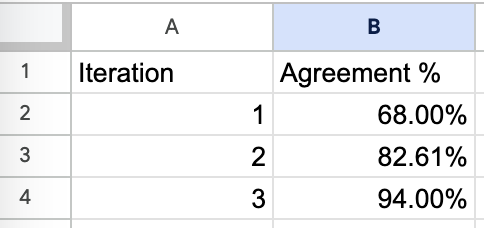
It took three iterations to realize >90% settlement, however this funding paid off in a system the crew might belief. With out this validation step, automated evaluations typically drift from human expectations over time, particularly because the distribution of inputs modifications. You possibly can learn extra about this right here.
Instruments like Eugene Yan’s AlignEval exhibit this alignment course of superbly. AlignEval supplies a easy interface the place you add knowledge, label examples with a binary “good” or “unhealthy,” after which consider LLM-based judges in opposition to these human judgments. What makes it efficient is the way it streamlines the workflow—you possibly can shortly see the place automated evaluations diverge out of your preferences, refine your standards based mostly on these insights, and measure enchancment over time. This method reinforces that alignment isn’t a one-time setup however an ongoing dialog between human judgment and automatic analysis.
Scaling With out Shedding Belief
As your AI system grows, you’ll inevitably face strain to cut back the human effort concerned in analysis. That is the place many groups go mistaken—they automate an excessive amount of, too shortly, and lose the human connection that retains their evaluations grounded.
Essentially the most profitable groups take a extra measured method:
Begin with excessive human involvement: Within the early levels, have area consultants consider a major share of outputs.Examine alignment patterns: Somewhat than automating analysis, give attention to understanding the place automated evaluations align with human judgment and the place they diverge. This helps you establish which forms of circumstances want extra cautious human consideration.Use strategic sampling: Somewhat than evaluating each output, use statistical strategies to pattern outputs that present essentially the most data, significantly specializing in areas the place alignment is weakest.Keep common calibration: Whilst you scale, proceed to check automated evaluations in opposition to human judgment recurrently, utilizing these comparisons to refine your understanding of when to belief automated evaluations.
Scaling analysis isn’t nearly decreasing human effort—it’s about directing that effort the place it provides essentially the most worth. By focusing human consideration on essentially the most difficult or informative circumstances, you possibly can preserve high quality at the same time as your system grows.
Now that we’ve lined find out how to preserve belief in your evaluations, let’s speak about a elementary shift in how it’s best to method AI growth roadmaps.
Your AI Roadmap Ought to Depend Experiments, Not Options
For those who’ve labored in software program growth, you’re aware of conventional roadmaps: a listing of options with goal supply dates. Groups decide to delivery particular performance by particular deadlines, and success is measured by how carefully they hit these targets.
This method fails spectacularly with AI.
I’ve watched groups decide to roadmap goals like “Launch sentiment evaluation by Q2” or “Deploy agent-based buyer assist by finish of yr,” solely to find that the expertise merely isn’t prepared to satisfy their high quality bar. They both ship one thing subpar to hit the deadline or miss the deadline fully. Both approach, belief erodes.
The elemental downside is that conventional roadmaps assume we all know what’s attainable. With standard software program, that’s typically true—given sufficient time and sources, you possibly can construct most options reliably. With AI, particularly on the innovative, you’re consistently testing the boundaries of what’s possible.
Experiments Versus Options
Bryan Bischof, former head of AI at Hex, launched me to what he calls a “functionality funnel” method to AI roadmaps. This technique reframes how we take into consideration AI growth progress. As a substitute of defining success as delivery a function, the aptitude funnel breaks down AI efficiency into progressive ranges of utility. On the prime of the funnel is essentially the most primary performance: Can the system reply in any respect? On the backside is totally fixing the person’s job to be performed. Between these factors are numerous levels of accelerating usefulness.
For instance, in a question assistant, the aptitude funnel may seem like:
Can generate syntactically legitimate queries (primary performance)Can generate queries that execute with out errors Can generate queries that return related resultsCan generate queries that match person intentCan generate optimum queries that clear up the person’s downside (full answer)
This method acknowledges that AI progress isn’t binary—it’s about steadily enhancing capabilities throughout a number of dimensions. It additionally supplies a framework for measuring progress even whenever you haven’t reached the ultimate purpose.
Essentially the most profitable groups I’ve labored with construction their roadmaps round experiments quite than options. As a substitute of committing to particular outcomes, they decide to a cadence of experimentation, studying, and iteration.
Eugene Yan, an utilized scientist at Amazon, shared how he approaches ML challenge planning with management—a course of that, whereas initially developed for conventional machine studying, applies equally nicely to fashionable LLM growth:
Right here’s a standard timeline. First, I take two weeks to do a knowledge feasibility evaluation, i.e., “Do I’ve the appropriate knowledge?”…Then I take an extra month to do a technical feasibility evaluation, i.e., “Can AI clear up this?” After that, if it nonetheless works I’ll spend six weeks constructing a prototype we are able to A/B check.
Whereas LLMs won’t require the identical type of function engineering or mannequin coaching as conventional ML, the underlying precept stays the identical: time-box your exploration, set up clear determination factors, and give attention to proving feasibility earlier than committing to full implementation. This method provides management confidence that sources received’t be wasted on open-ended exploration, whereas giving the crew the liberty to be taught and adapt as they go.
The Basis: Analysis Infrastructure
The important thing to creating an experiment-based roadmap work is having sturdy analysis infrastructure. With out it, you’re simply guessing whether or not your experiments are working. With it, you possibly can quickly iterate, check hypotheses, and construct on successes.
I noticed this firsthand in the course of the early growth of GitHub Copilot. What most individuals don’t understand is that the crew invested closely in constructing refined offline analysis infrastructure. They created methods that would check code completions in opposition to a really giant corpus of repositories on GitHub, leveraging unit exams that already existed in high-quality codebases as an automatic strategy to confirm completion correctness. This was an enormous engineering endeavor—they needed to construct methods that would clone repositories at scale, arrange their environments, run their check suites, and analyze the outcomes, all whereas dealing with the unbelievable variety of programming languages, frameworks, and testing approaches.
This wasn’t wasted time—it was the inspiration that accelerated every thing. With stable analysis in place, the crew ran hundreds of experiments, shortly recognized what labored, and will say with confidence “This alteration improved high quality by X%” as an alternative of counting on intestine emotions. Whereas the upfront funding in analysis feels sluggish, it prevents infinite debates about whether or not modifications assist or harm and dramatically quickens innovation later.
Speaking This to Stakeholders
The problem, in fact, is that executives typically need certainty. They need to know when options will ship and what they’ll do. How do you bridge this hole?
The secret is to shift the dialog from outputs to outcomes. As a substitute of promising particular options by particular dates, decide to a course of that may maximize the possibilities of attaining the specified enterprise outcomes.
Eugene shared how he handles these conversations:
I attempt to reassure management with timeboxes. On the finish of three months, if it really works out, then we transfer it to manufacturing. At any step of the way in which, if it doesn’t work out, we pivot.
This method provides stakeholders clear determination factors whereas acknowledging the inherent uncertainty in AI growth. It additionally helps handle expectations about timelines—as an alternative of promising a function in six months, you’re promising a transparent understanding of whether or not that function is possible in three months.
Bryan’s functionality funnel method supplies one other highly effective communication instrument. It permits groups to point out concrete progress by means of the funnel levels, even when the ultimate answer isn’t prepared. It additionally helps executives perceive the place issues are occurring and make knowledgeable choices about the place to take a position sources.
Construct a Tradition of Experimentation By way of Failure Sharing
Maybe essentially the most counterintuitive side of this method is the emphasis on studying from failures. In conventional software program growth, failures are sometimes hidden or downplayed. In AI growth, they’re the first supply of studying.
Eugene operationalizes this at his group by means of what he calls a “fifteen-five”—a weekly replace that takes fifteen minutes to put in writing and 5 minutes to learn:
In my fifteen-fives, I doc my failures and my successes. Inside our crew, we even have weekly “no-prep sharing periods” the place we talk about what we’ve been engaged on and what we’ve discovered. After I do that, I am going out of my strategy to share failures.
This apply normalizes failure as a part of the training course of. It reveals that even skilled practitioners encounter dead-ends, and it accelerates crew studying by sharing these experiences overtly. And by celebrating the method of experimentation quite than simply the outcomes, groups create an setting the place folks really feel protected taking dangers and studying from failures.
A Higher Method Ahead
So what does an experiment-based roadmap seem like in apply? Right here’s a simplified instance from a content material moderation challenge Eugene labored on:
I used to be requested to do content material moderation. I mentioned, “It’s unsure whether or not we’ll meet that purpose. It’s unsure even when that purpose is possible with our knowledge, or what machine studying strategies would work. However right here’s my experimentation roadmap. Listed below are the strategies I’m gonna strive, and I’m gonna replace you at a two-week cadence.”
The roadmap didn’t promise particular options or capabilities. As a substitute, it dedicated to a scientific exploration of attainable approaches, with common check-ins to evaluate progress and pivot if mandatory.
The outcomes had been telling:
For the primary two to a few months, nothing labored. . . .After which [a breakthrough] got here out. . . .Inside a month, that downside was solved. So you possibly can see that within the first quarter and even 4 months, it was going nowhere. . . .However then you too can see that impulsively, some new expertise…, some new paradigm, some new reframing comes alongside that simply [solves] 80% of [the problem].
This sample—lengthy intervals of obvious failure adopted by breakthroughs—is widespread in AI growth. Conventional feature-based roadmaps would have killed the challenge after months of “failure,” lacking the eventual breakthrough.
By specializing in experiments quite than options, groups create house for these breakthroughs to emerge. In addition they construct the infrastructure and processes that make breakthroughs extra probably: knowledge pipelines, analysis frameworks, and speedy iteration cycles.
Essentially the most profitable groups I’ve labored with begin by constructing analysis infrastructure earlier than committing to particular options. They create instruments that make iteration sooner and give attention to processes that assist speedy experimentation. This method might sound slower at first, but it surely dramatically accelerates growth in the long term by enabling groups to be taught and adapt shortly.
The important thing metric for AI roadmaps isn’t options shipped—it’s experiments run. The groups that win are these that may run extra experiments, be taught sooner, and iterate extra shortly than their rivals. And the inspiration for this speedy experimentation is all the time the identical: sturdy, trusted analysis infrastructure that offers everybody confidence within the outcomes.
By reframing your roadmap round experiments quite than options, you create the circumstances for related breakthroughs in your individual group.
Conclusion
All through this publish, I’ve shared patterns I’ve noticed throughout dozens of AI implementations. Essentially the most profitable groups aren’t those with essentially the most refined instruments or essentially the most superior fashions—they’re those that grasp the basics of measurement, iteration, and studying.
The core rules are surprisingly easy:
Have a look at your knowledge. Nothing replaces the perception gained from inspecting actual examples. Error evaluation persistently reveals the highest-ROI enhancements.Construct easy instruments that take away friction. Customized knowledge viewers that make it simple to look at AI outputs yield extra insights than advanced dashboards with generic metrics.Empower area consultants. The individuals who perceive your area finest are sometimes those who can most successfully enhance your AI, no matter their technical background.Use artificial knowledge strategically. You don’t want actual customers to start out testing and enhancing your AI. Thoughtfully generated artificial knowledge can bootstrap your analysis course of.Keep belief in your evaluations. Binary judgments with detailed critiques create readability whereas preserving nuance. Common alignment checks guarantee automated evaluations stay reliable.Construction roadmaps round experiments, not options. Decide to a cadence of experimentation and studying quite than particular outcomes by particular dates.
These rules apply no matter your area, crew measurement, or technical stack. They’ve labored for firms starting from early-stage startups to tech giants, throughout use circumstances from buyer assist to code technology.
Sources for Going Deeper
For those who’d prefer to discover these subjects additional, listed below are some sources that may assist:
My weblog for extra content material on AI analysis and enchancment. My different posts dive into extra technical element on subjects reminiscent of setting up efficient LLM judges, implementing analysis methods, and different points of AI growth.1 Additionally try the blogs of Shreya Shankar and Eugene Yan, who’re additionally nice sources of data on these subjects.A course I’m educating, Quickly Enhance AI Merchandise with Evals, with Shreya Shankar. It supplies hands-on expertise with strategies reminiscent of error evaluation, artificial knowledge technology, and constructing reliable analysis methods, and consists of sensible workouts and customized instruction by means of workplace hours.For those who’re on the lookout for hands-on steerage particular to your group’s wants, you possibly can be taught extra about working with me at Parlance Labs.
Footnotes
I write extra broadly about machine studying, AI, and software program growth. Some posts that increase on these subjects embrace “Your AI Product Wants Evals,” “Making a LLM-as-a-Choose That Drives Enterprise Outcomes,” and “What We’ve Discovered from a 12 months of Constructing with LLMs.” You possibly can see all my posts at hamel.dev.
[ad_2]
Source link


