

[ad_1]
Mongolia, a rustic of putting contrasts, presents a singular fintech panorama. Regardless of being one of many world’s largest nations by land space, it is usually one of many least densely populated, with huge distances separating its folks and financial hubs. This distinctive geography shapes the challenges and alternatives inside Mongolia’s evolving fintech sector.
Traditionally wealthy and culturally vibrant, Mongolia’s fashionable historical past has been deeply formed by its expertise is a Soviet satellite tv for pc state, a standing it held till the Soviet Union dissolved in 1989. Following the collapse of Soviet management, Mongolia quickly transitioned to a free-market financial system by 1992, embracing financial reforms that opened the door to world commerce and funding.
Whereas sustaining sturdy cultural and financial ties with its neighbours Russia and China, Mongolia has additionally developed important partnerships with Western nations, together with Japan, South Korea, and the USA, additional integrating itself into the worldwide financial system.
Mongolia is at the moment categorised as a lower-middle-income financial system, with a gross home product (GDP) per capita exceeding $5,000. Though agriculture and livestock traditionally rooted its financial system, Mongolia has since diversified considerably. As we speak, considerable mineral assets, together with copper, coal, tin, and gold, closely drive the nation’s financial output. Moreover, the manufacturing of development supplies and high-value animal merchandise, significantly cashmere wool, play a vital position within the nation’s financial productiveness.
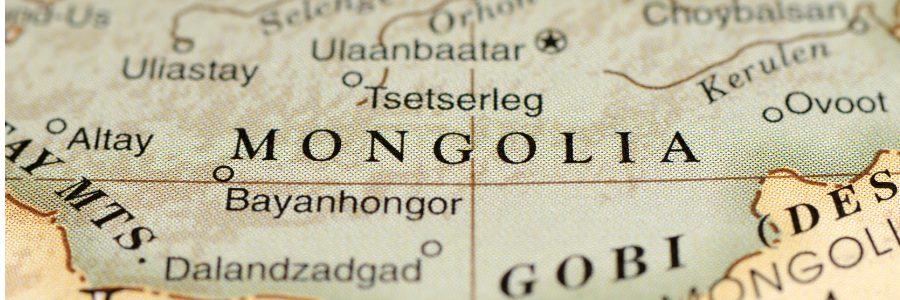
Regardless of its huge land space, Mongolia stays one of many least densely populated nations on this planet. Spanning 1.565 million sq. kilometres, it’s the 18th largest nation globally. Nonetheless, with a inhabitants of simply 3.398 million folks, the nation faces distinctive challenges associated to its sparse inhabitants distribution.
Practically half of Mongolia’s inhabitants – about 1.452 million folks – reside within the capital, Ulaanbaatar, with the broader metropolitan space accounting for about 1.615 million folks. Outdoors the capital, many Mongolians proceed to reside conventional, nomadic existence, which frequently ends in restricted entry to monetary infrastructure.
The monetary sector
5 main banks – Golomt Financial institution, Khan Financial institution, State Financial institution, Khas Financial institution and Commerce and Improvement Financial institution -predominantly management Mongolia’s monetary providers sector, collectively accounting for round 90 % of the nation’s financing.
In 2022, the overall belongings inside the banking sector grew by 12.3 per cent, reaching 46 trillion MNT (roughly $13.581billion). The Financial institution of Mongolia, often known as Mongol Financial institution, serves because the nation’s central financial institution, overseeing financial coverage and monetary regulation. Notably, Mongolia at the moment has no overseas banks working inside its borders, reflecting a banking sector that continues to be domestically pushed.
Nonetheless, the monetary panorama in Mongolia is present process important transformation. Recognising the potential of digital know-how to drive financial improvement, the federal government has been proactive in selling digitalisation.
In 2020, it launched an formidable five-year plan to construct a ‘Digital Nation,’ with the purpose of attaining 90 per cent digital transformation throughout the nation by this 12 months. To spearhead these efforts, the federal government established the Mongolian Ministry of Digital Improvement and Communications, signalling a powerful dedication to integrating digital options into the nation’s financial and social cloth.
Digital ecosystem
These digital initiatives are already making an impression throughout Mongolia’s broader digital ecosystem. A major milestone occurred in January final 12 months when the Parliament handed the Funding Banking Legislation, paving the best way for the institution and operation of funding banks inside the nation. This legislative transfer is a transparent indication of Mongolia’s dedication to increasing and modernising its monetary sector. Furthermore, the federal government stays steadfast in its purpose to realize 90 per cent digital transformation throughout the nation by the top of this 12 months.
Among the many authorities’s key initiatives is the E-Mongolia platform, making authorities providers obtainable on-line. By 2022, over 75 per cent of the inhabitants had already engaged with the platform, highlighting its widespread adoption. For a rustic with a sparse inhabitants and a deeply rooted nomadic tradition, the creation of a centralised digital platform for presidency providers represents a ground-breaking achievement. As of at present, the E-Mongolia platform has digitalised over 2,000 authorities providers, offering comfort and accessibility to residents no matter their location within the huge nation.
Along with E-Mongolia, the federal government has leveraged synthetic intelligence (AI) to digitalise numerous certificates and college diplomas. To assist this digital transformation, a number of key legal guidelines have been enacted in 2020 and carried out in 2022, together with laws on Private Data Safety, Public Data, Cybersecurity, Digital Signatures, and Digital Asset Service Suppliers.
Progress
Regardless of its small inhabitants, Mongolia is actively extending its fintech affect past its borders. As an example, this 12 months, the Monetary Regulatory Fee of Mongolia (FRC) signed a memorandum of understanding (MoU) with the Nationwide Financial institution of the Kyrgyz Republic (Kyrgyzstan).
Its first fintech service contains the SocialPay digital pockets, which was launched in 2017 with almost half 1,000,000 customers and owned by Golomt Financial institution.
One among Mongolia’s earliest fintech successes is the SocialPay digital pockets, launched in 2017 by Golomt Financial institution. With almost half 1,000,000 customers, SocialPay set the stage for the expansion of digital monetary providers within the nation. Moreover, key organisations such because the Mongolian Fintech Affiliation (MFA), established in 2019, have been instrumental in fostering the event of the fintech ecosystem.
International funding
International direct funding (FDI) and worldwide partnerships proceed to play a big position in advancing Mongolia’s fintech sector. For instance, Singapore-based Finbots.ai partnered with M Financial institution in 2022 to boost the financial institution’s digital lending capabilities. Equally, Khan Financial institution’s collaboration with Alipay+ this 12 months has expanded digital fee choices in Mongolia, permitting vacationers from nations like China, the Philippines, South Korea, and Thailand to make use of their most popular e-wallets, together with Alipay, GCash, Kakao Pay, and TrueMoney whereas touring in Mongolia.
Whereas Mongolian banks have historically been sluggish to undertake digital experiences, that is quickly altering. Many banks are actually actively partnering with fintech corporations and transitioning to digital banking. Notably, not less than two-thirds of Mongolian banks have carried out biometric authentication for buyer identification, and over 80 % report accepting on-line mortgage purposes from small and medium enterprises (SMEs).
Mongolia’s huge and underpopulated territory, wealthy in cultural heritage, presents each challenges and alternatives for the fintech sector. The continued digital transformation gives important potential for monetary inclusion and financial improvement, positioning Mongolia as a rising participant within the world fintech panorama.
[ad_2]
Source link


